Tomorrowland
This article examines the key factors behind the evolution of Tomorrowland, including its global expansion, its economic impact on the tourism industry, its influence on music, and its vision for technological innovation and the future.
In 2005, when the music world was largely defined by rock and indie stages, brothers Manu and Michiel Beers dared to think differently. They envisioned a unique, cathartic experience, not just a concert, but a magical festival built around the aesthetics of electronic dance music and nature. This ambitious project was named Tomorrowland, first taking root in the town of Boom, Belgium.

Tomorrowland 2005 | official aftermovie
For anyone wondering what Tomorrowland is, the answer is not as simple as it was 15 or 20 years ago. It evolved from a one-day experiment for about 10,000 people into a globally revered cultural phenomenon spanning more than six days of electronic music. Its immense success even spawned international editions, including Tomorrowland Winter in France, Tomorrowland Brasil, and the now-defunct TomorrowWorld in the United States.
Founding and Initial Growth of Tomorrowland
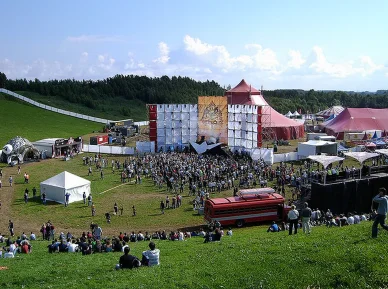
Photo from the first edition of Tomorrowland festival in 2005, showing a simple stage and crowd in a natural green setting.
The festival's unique atmosphere and early success were not accidental; they were the direct result of a core philosophy envisioned by its founders.
A Vision for a Surrealistic Experience
The origins of the Tomorrowland festival in Belgium trace back to a specific vision held by brothers Manu Beers and Michiel Beers. Their idea was not merely to host a concert, but to create a unique fantasy world —a full sensory experience —an idea sparked by a memorable Boy Scout party they had organized nearly a decade earlier. They aimed to transform the provincial recreational area of De Schorre Park in Boom into a temporary fairy-tale dominion, offering attendees a complete sensory escape that transcended traditional music events.
This vision was first realized on August 14, 2005. The inaugural event attracted around 10,000 visitors who witnessed a roster of established electronic music pioneers, including Sven Väth, Sasha, Armin van Buuren, and Justice. From its very first day until now, the event distinguished itself by prioritising elaborate stage design and a theme-driven atmosphere. For instance, in 2009, the Tomorrowland theme was “Mask” (originally titled Masker in Dutch). This foundational commitment to world-building, established at the first Tomorrowland, would become the festival's defining characteristic and the primary driver of its future global success.
Expansion and International Acclaim
After its debut, the Tomorrowland festival grew rapidly. It expanded to a two-day format in 2007 to meet rising demand, and by 2008, attendance had reached about 50,000 people. The event sold out for the first time in 2009, the same year the festival introduced the first official theme, "Masker," which signaled a deeper focus on a theme-driven atmosphere. As a result of this growth, the festival earned early nominations at the International Dance Music Awards and later expanded to a three-day event in 2011.

Tomorrowland 2009 | official aftermovie
A Decade of Dominance and Innovation
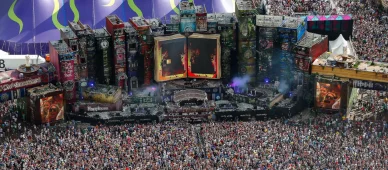
Photo from Tomorrowland 2012 held in Boom, Belgium, which featured spectacular aerial nighttime photography for the first time and produced one of the most-viewed festival aftermovies of all time, becoming a defining cultural moment for electronic dance music.
The period from 2011 to 2019 was marked by rapid international growth, with record-breaking ticket sales and increasingly elaborate production and scenography standards.
The Viral Phenomenon (2011–2015)
This period is often considered the festival's golden era, aligning with the peak of the global EDM boom. The festival expanded to a three-day format in 2011, drawing 180,000 attendees. The 2012 event, with its “The Book of Wisdom” theme, also sold out and saw the rise of festival ambassadors Dimitri Vegas & Like Mike. The on-site experience evolved as the DreamVille campsite grew, extending the event to a five-day gathering for campers. A 2013 camping package, for example, cost around €240 and included a festival pass and pre-party access.
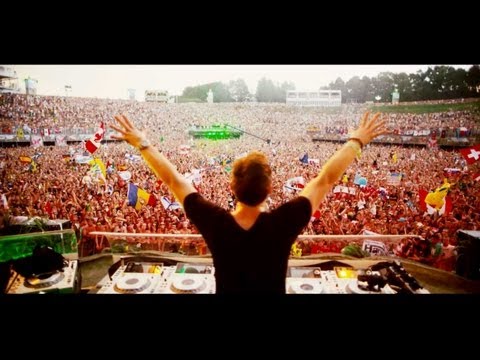
Tomorrowland 2013 | official aftermovie
The festival's global profile grew significantly due to its cinematic aftermovies. The 2012 Tomorrowland music festival aftermovie received over 170 million views on YouTube, turning the event into a truly global phenomenon. The festival's increased popularity was evident when the 2013 edition sold out in 35 minutes.
The Challenges of Global Expansion
The brand’s ambition led to two major international spin-off festivals with distinctly different fates. TomorrowWorld in the USA (2013-2015) ended after a 2015 weather crisis led to logistical problems, which were made worse by the bankruptcy of its American business partner, SFX Entertainment. Tomorrowland Brasil (2015-2016) was indefinitely halted due to Brazil’s economic and political instability at the time.
These ventures demonstrated the risks of attempting to directly replicate the main festival on a large scale. This led the Tomorrowland organisers to adopt a different model for Tomorrowland Winter, a hybrid festival and week-long ski holiday in the French Alps. This approach reduces risk by using an established resort's infrastructure. A key aspect of the Winter model is that it's managed directly by the core Belgian team, which allows for complete operational control.
Tomorrowland 2025 Recap
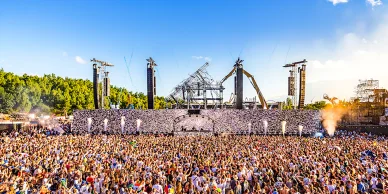
Photo from Tomorrowland 2025 festival showing the elaborate "Orbyz" themed main stage and massive crowd at De Schorre Park in Boom, Belgium.
Coming off its 20th-anniversary high in 2024, the 2025 edition didn’t slow down for a second. Despite a major fire that destroyed the main stage just two days before opening, organizers rebuilt it in record time and delivered the festival on schedule, maintaining Tomorrowland’s world-class standard.

Tomorrowland Belgium 2025 l Official Aftermovie
Dates, Schedule, and Attendance Highlights
The Tomorrowland festival 2025 was held on the weekends of July 18–20 and July 25–27. Following the massive 20th-anniversary celebrations in 2024, the 2025 edition continued the tradition with two sold-out weekends welcoming more than 400,000 visitors from over 200 countries. The lineup was unveiled in stages, with the full list of 600+ artists released in late January 2025. All tickets sold out in under an hour on February 1, 2025, through the official Tomorrowland website.
The official theme for Tomorrowland festival 2025 was “Orbyz,” a new concept introduced as the next chapter after the 2024 theme “LIFE.” The main stage design featured futuristic elements and elaborate details, continuing the festival’s legacy of storytelling through visual art. The lineup included top-tier electronic artists such as Armin van Buuren, David Guetta, and Dimitri Vegas & Like Mike, along with curated stage takeovers from international labels and hosts.
Stage Concepts
Just two days before opening, a fire destroyed the festival’s original Orbyz-themed main stage, a 160-meter-wide and 45-meter-high structure that had taken months to design and build. In a remarkable 36-hour turnaround, crews of nearly 200 technicians and engineers constructed a fully functional replacement stage, using structural components from Metallica’s touring rig.

Tomorrowland Festival Begins After Main Stage Destroyed By Fire | 10 News
The new main stage measured roughly 70 meters wide and 8 meters high—far smaller than the original—but still managed to capture Tomorrowland’s spirit through immersive lighting, synchronized visuals, and refined sound design. Across the rest of the festival grounds, more than 16 themed stages—including CORE, Freedom, Crystal Garden, and Atmosphere—continued to deliver world-class productions, each reflecting musical identity. To ensure safety, organizers decided to cancel all fireworks and large pyrotechnic effects.
All About Tickets
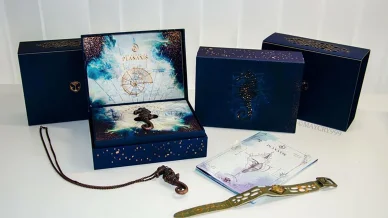
Physical Tomorrowland festival tickets featuring the festival's distinctive artwork and branding, providing access to one of the world's largest electronic dance music festivals held annually in Boom, Belgium.
Getting into Tomorrowland is an adventure all on its own. Since tickets often disappear within minutes, it pays to plan ahead. Here’s how Tomorrowland’s ticketing and travel options work — from basic passes to full Global Journey packages.
Passes, Prices, and Where to Buy
Getting a Tomorrowland festival ticket has become a challenge in itself. Understanding the different access types is key to navigating the process. The festival offers several tiers, including:
- Day Passes (for single-day entry);
- Full Madness Passes (for a full weekend);
- Comfort Passes (for VIP experiences).
Many of these are sold as part of a DreamVille package, which combines festival access with on-site camping. For reference, 2025 DreamVille prices ranged from approximately €430 for a basic camping spot to €675 per person for an upgraded tent with a wooden floor and power outlet.
Tickets are sold exclusively through the official Tomorrowland website, and organizers strongly advise avoiding all unofficial third-party vendors, as fraudulent passes will be voided at the entrance. For those who miss the main sale, an official Waiting List provides a final, legitimate chance to purchase returned or canceled tickets.
The Global Journey Experience
This is a travel package and is the safest way for many international fans to attend the Tomorrowland festival. Its dedicated sale takes place before the general worldwide sale, which can guarantee tickets. These comprehensive travel packages offer access from various cities around the world by bundling a festival pass with transportation — flights, trains, or buses —and accommodation, either at DreamVille or a partner hotel.
- Package Options: Ranging from basic travel to themed party buses, with all necessary transfers included.
- Added Value: Packages often include extra amenities like welcome gifts or dedicated check-in points.
While the offer comes with a premium price, it simplifies the process by combining the ticket, travel, and lodging into a single transaction, removing the uncertainty of the general ticket sale.
Navigating the Festival
The unique atmosphere of Tomorrowland is inseparable from its physical location. The experience is spread across two distinct but interconnected areas.
The Venue: De Schorre Provincial Park
The Tomorrowland festival in Belgium takes place annually at De Schorre Park in Boom, located about 30 minutes from both Brussels and Antwerp. Each year, organizers transform the public park by building extensive temporary infrastructure. The main stage is set within a natural amphitheater, providing clear sightlines for the massive crowds.
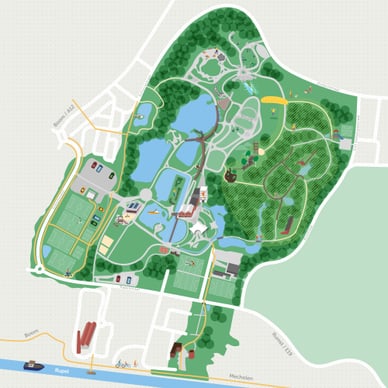
De Schorre is a provincial recreation area run by the province of Antwerp located in Boom
The festival's impact extends beyond the temporary setup; it has gifted permanent art installations to the park, such as the One World bridge and Thomas Dambo's troll sculptures. This work aligns with the festival's official Love Tomorrow sustainability platform.
To manage the influx of hundreds of thousands of people, Tomorrowland offers various transportation options. Festivalgoers can arrive via official shuttles, dedicated train services to Boom, or by car, using nearby parking — all coordinated through a comprehensive traffic management plan.
DreamVille Accommodation
The DreamVille campsite is a vibrant city that houses 45,000 people, creating a 24/7 community atmosphere. The experience begins on Thursday with The Gathering pre-party, extending the Tomorrowland festival into a five-day adventure.

Dreamville + Festival + Opening Ceremony Mainstage
Its extensive amenities include a full marketplace, numerous food stalls, and even dedicated salons. Accommodation options range from the basic Magnificent Greens (where you bring your own tent) to popular pre-pitched Easy Tent packages, and extend to the exclusive Montagoe area, which offers luxury lodging like private cabins and mansions. For many festivalgoers, DreamVille camping is considered a vital part of the Tomorrowland experience.
The Music and Artists
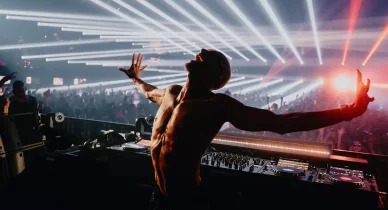
Photo from a performance at Tomorrowland Belgium 2024.
Music stays at the heart of the festival. Its lineup covers every corner of electronic sound.
Genres and Stages
A defining feature of the Tomorrowland music festival is its comprehensive coverage of nearly all electronic music genres, from mainstream progressive house to dedicated niches like techno, trance, and hardstyle. The festival's programming strategy relies on inviting renowned stage hosts — record labels such as Anjunabeats, artist-led brands like Afterlife, or genre leaders like Q-Dance — to curate a specific stage for an entire day.
This creates distinct micro-environments for fans. For example, the indoor Freedom Stage often hosts major techno acts, the massive tent of the Atmosphere Stage is a haven for trance, and the colossal Q-Dance arena serves as the global epicenter for hardstyle. While these areas cater to specific sub-genres, the Mainstage features a broader mix of the world's most recognized DJs. This multi-layered approach allows the festival to host a massive lineup of 800+ artists across its many stages, and the result is a constant and diverse musical offering.
Iconic Performances
Beyond its diverse lineup, Tomorrowland is also known for the iconic performances that have become a defining part of its history. The legacy of Avicii is central to this, from his early sets that premiered global anthems to the emotional, festival-wide tributes after his passing. Other defining acts include mainstage veteran David Guetta and the highly regarded trance sets from Armin van Buuren.
Surprise collaborations are a festival staple, such as a much-talked-about impromptu B2B set between Armin van Buuren and Hardwell in 2018. Many artists view their mainstage slot as a career pinnacle, crafting unique setlists and debuting unreleased music. This creates a frenzy of "Tomorrowland IDs" — highly anticipated tracks that fans spend months hunting for online after the festival.
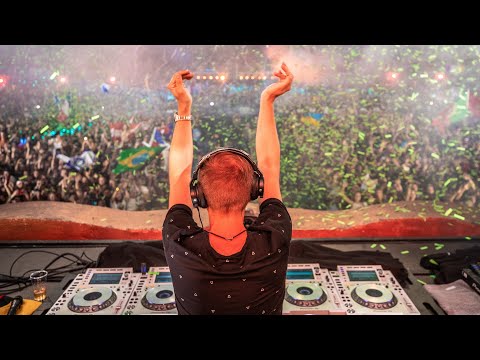
Armin van Buuren live at Tomorrowland 2018
Production Technology and Digital Platforms
Technological innovation is central to Tomorrowland's show design and production, in both its stage technology and its digital platforms. On site, the festival uses advanced audio, lighting, and visual systems to create immersive stages. Online, it reaches millions of fans through high-quality live streams and interactive platforms.
Audiovisual Engineering and Visual Design
The stage production technology at Tomorrowland is recognized for its exceptionally high standards. Across the site, Tomorrowland deploys large-format L-Acoustics systems on its main areas; the Atmosphere stage has featured immersive configurations — L-ISA in 2018 and, more recently, HOLOPLOT X1 — while other stages are specified case-by-case to suit their acoustics.
The visual production features large-scale high-resolution LED displays and an extensive range of special effects, including coordinated pyrotechnics, CO₂ cannons, and integrated water fountains.These visual elements are exemplified by the Atmosphere Stage, a vast domed structure featuring a wrap-around LED ceiling. A dedicated show control team operates the entire show, synchronizing every effect with the music.
Digital Ecosystem
The Tomorrowland festival’s digital strategy enhances both the on-site experience and its connection with a global audience. A key part of this outreach is the high-production-value livestream, which rose to prominence around 2012, allowing millions to watch sets from multiple stages at home.
For attendees, the official mobile app became an essential tool by the mid-2010s for schedules and navigation. In 2015, the festival introduced a cashless payment system using NFC-enabled wristbands preloaded with ‘Pearls’ for all on-site purchases. The ecosystem expanded again in 2019 with the launch of One World Radio — a 24/7 digital station, accessible via the official app and website. It broadcasts live from the festival grounds and streams visual content on YouTube, keeping the global community engaged year-round.
The Community and Economic Impact
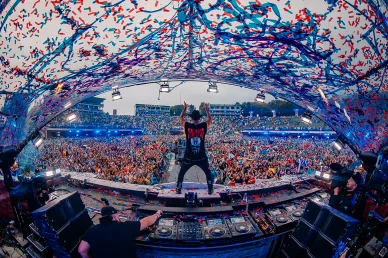
Photo from Tomorrowland Belgium 2023 showing the spectacular "Adscendo" themed main stage and massive crowd at De Schorre Park in Boom.
The influence of Tomorrowland extends far beyond the festival itself, affecting both the global community it has built and the local Belgian economy. The event has attracted a worldwide community around its core “People of Tomorrow” philosophy, as well as an economic boost to its home region through tourism and local spending.
People of Tomorrow Philosophy
The guiding philosophy of Tomorrowland centres on a global community known as the People of Tomorrow. This ethos is encapsulated in the festival's official motto: "Live Today, Love Tomorrow, Unite Forever". The event actively promotes core values of unity and diversity among festivalgoers from over 200 countries. Its environment is designed to facilitate cultural exchange. A shared passion for music helps bridge national and cultural divides.
These values are reinforced through shared experiences, such as the daily opening and closing ceremonies on the Main Stage. The philosophy is also represented on site through permanent art installations like the One World Bridge. The artwork serves as a physical symbol of this community, covered with thousands of engraved wooden planks bearing messages from festivalgoers. For many, this sense of unity is a defining characteristic of the event.
Contribution to Tourism and Economy
The economic impact of the Tomorrowland festival in Belgium is substantial, generating an estimated €200–250 million annually. This effect is felt widely across Belgium's tourism sector, with nearby cities like Antwerp and Brussels seeing sharp increases in hotel occupancy, restaurant activity, and transportation demand during the festival period. The event also brings direct benefits to its host municipalities of Boom and Rumst by funding local community projects — including the Stairway to Unity public art installation — and by providing financial support for local sports clubs and seasonal job creation.
Beyond its commercial footprint, the festival contributes globally through the Tomorrowland Foundation, which supports music and arts education for children and youth. This blend of local investment and international philanthropy enhances Belgium’s global profile as a leading destination for electronic music and cultural tourism.
Legacy and Sustainability
Tomorrowland’s sustainability efforts are led by its Love Tomorrow platform, which focuses on responsible resource management and minimizing long-term environmental impact. Key initiatives include waste-reduction programs such as the on-site Recycle Club, which rewards attendees for returning recyclable materials, and the promotion of green transportation through train travel packages and cycling incentives. The festival also emphasizes conscious food choices, expanding its range of locally sourced and plant-based meals to lower its carbon footprint.
Beyond its environmental mission, Tomorrowland festival has evolved into a global cultural brand, extending its creative vision through ventures like TML by Tomorrowland apparel and the Tomorrowland Music label. What began in 2005 as a local event in Boom, Belgium, now sets the benchmark for music festivals worldwide. By combining innovation, sustainability, and community, Tomorrowland continues to shape the future of the electronic music experience while preserving the values that built its legacy.