St Patrick’s Day
When you think of Irish heritage and the country’s most famous exports, the chances are that you think of St Patrick’s Day. Celebrated every year on March 17th, it’s an excuse to wear green, drink Guinness and celebrate Ireland and Irish culture.
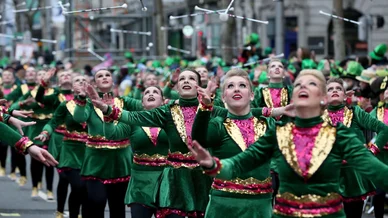
St Patrick’s Day is celebrated in more than 50 countries worldwide. It’s no surprise, then, that it’s Ireland’s most widely celebrated cultural festival. But what is St Patrick’s Day?
We’ll be answering that question in today’s article, digging into how and why the date is used for Saint Patrick commemoration and a celebration of Irish heritage. Along the way, we’ll cover how it evolved from being a religious feast day to a global celebration of Ireland and its culture.

Why St Patrick's Day went global
If you’re looking for a comprehensive guide covering everything from parades to traditions and Irish greetings, you’ve come to the right place. Let the celebration begin.
How it All Began
The Life and Legacy of Saint Patrick
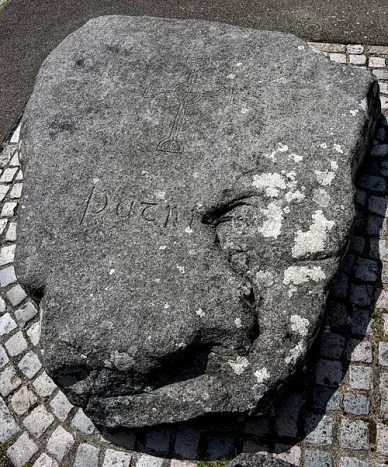
Saint Patrick's grave stone at Down Cathedral.
Meet Saint Patrick. Born towards the end of the 4th century in Roman Britain, the future saint lived a life that was so unremarkable that not much is known about him until he was captured by the Irish and forced into slavery, spending six years working as a shepherd in almost total isolation.
It was during this time, right at the start of the 5th century, that Patrick turned to prayer, mostly asking God to allow him to return home. God was listening and his prayers were answered, with the young slave escaping and returning to Britain, where his faith led to him becoming a priest.
Before long, he felt compelled to return to Ireland to carry out missionary work, spreading Christianity in Ireland by founding schools, churches and monasteries and spreading the word of God. By the time of his March 17th death—the date that would eventually become St Patrick’s Day —he’d laid the foundations for Ireland to transform from paganism to Christianity.
How it Became a Cultural Holiday
Today, we think of St Patrick’s Day as a modern celebration, but its religious origins stretch back as far as the 10th century. During the 17th century, a religious scholar and theologian called Luke Wadding played a pivotal role in turning it into a true holy day by establishing it as a Catholic feast day.
It wasn’t until the 18th century, though, that it started to look more like the cultural celebration that we know today. Irish immigrants in North America started holding parades, while in Ireland they would not appear until much later.
The first official Irish parade was the Waterford 1903 parade, and it took place largely as part of a wider cultural transformation during which the Gaelic League campaigned to promote Irish pride and nationalism. This would eventually lead to the international celebrations that we see today.
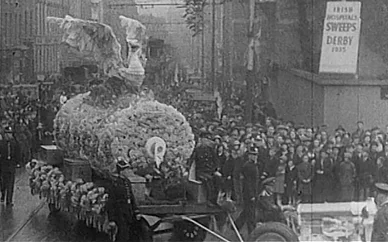
Historical photograph of St. Patrick's Day parade from the 1930s showing participants in traditional celebrations.
All About Our Modern Celebrations
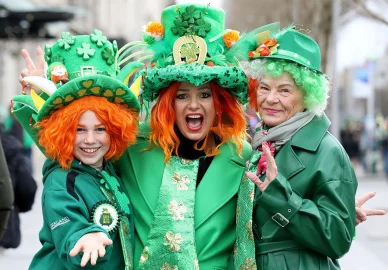
Irish people celebrating St. Patrick's Day wearing traditional green clothing and costumes.
You’ll hear the same old question every year: When is St Patrick’s Day? And the good news for those of us with bad memories is that it takes place on the same date every year.
The March 17th significance is because as far as we know, it’s the death anniversary of the man who started it all. The deaths of saints were often used to mark holy days amongst Christians, and that led to March 17th becoming the official date that we celebrate.
Still, there are times when asking when is St Patrick’s Day makes sense, because it does get moved from time to time. For example, when there are Holy Week conflicts, such as there were in 1940 and 2008, it’s rescheduled. Don’t expect that to happen again until 2160, though.
For the most part, the day plays an important role in the Irish folk calendar as a spring celebration, and a sign of warmer days to come. It’s traditionally viewed as the point at which the weather starts to improve and the time at which it’s best to plant potatoes.
How to Celebrate
Speak Like a Native Irishman
If you want to celebrate St Patrick's Day in Irish, you’re going to want to learn to speak like a native. There are plenty of Irish language greetings for you to pick from, so let’s start with the most common.
Most natives who want to wish someone a happy St Patrick’s Day in Irish will say “Lá Fhéile Pádraig sona duit”, which literally means “Happy St Patrick’s Day to you”. You’re particularly likely to hear this during Seachtain na Gaeilge, which is Irish Language Week and which takes place from March 1st to March 17th. You read that right—it’s actually closer to three weeks.
Throughout Irish Language Week (and the month of March in general), expect to hear plenty of people wishing each other a happy St Patrick’s Day in Irish, as well as carrying out traditional blessings and toasts.
For example, you might hear people saying “Sláinte!”, which means “To health!”. You might also hear longer blessings like “Go mbeannaí Dia dhaoibh”, which means “God bless you.” Don’t be afraid to spend some time online looking up common phrases and pronunciation guides. A true Irishman will respect you for making the effort.
How the English Do it

St. Patrick's Day parade.
If wishing people a happy St. Patrick’s Day in Irish Gaelic is too difficult, you can always use English greetings instead. People use everything from the basic “Happy St Patrick’s Day” to more formal messages and English spins on Irish blessings like “Top o’ the morning to ye.”
If you’re shopping around for Irish greeting cards, you’ll see phrases like “May your troubles be less and your blessings be more.” Social media wishes tend to be lighter and more informal, varying hugely from one person to the next.
This highlights an important point, which is that you’ll want to consider the context in which you’re talking. Blessings might make more sense in religious settings, while shamrocks and green top hats are better suited to social media posts and parties. It’s all about matching your outfit and behaviour to the people and place that you’re celebrating in.
The Symbols of St Patrick’s Day
Understanding the Shamrock
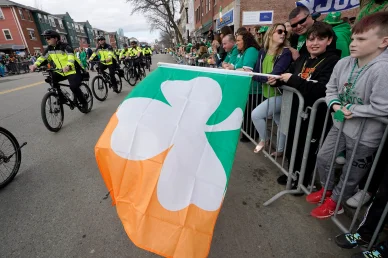
Irish person holding the Irish flag with shamrock symbol during St. Patrick's Day parade.
The shamrock is one of the most iconic symbols of St Patrick’s Day, and you’re likely already familiar with the iconic three-leaf clover. The idea behind shamrock symbolism is that its three leaves represent the Holy Trinity of the Father, the Son and the Holy Spirit.
In fact, it’s believed that Patrick himself used this symbolism within his teachings. This makes sense, even though the first references to the story date back to the 18th century. After all, in Celtic tradition, the number three was already important, and three-leaf clovers were all over the place.
There’s even a drowning shamrock tradition, in which revellers wear a shamrock throughout the day and then for their final drink in the evening, they put the shamrock in their drink, toast Saint Patrick and then take the shamrock back out and throw it over their shoulder. There’s no religious significance here, though—it’s just a little extra fun at the end of the day.
Why We Wear Green
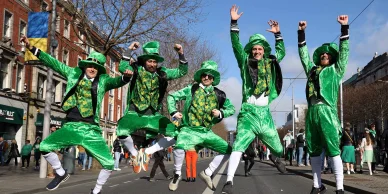
St. Patrick's Day parade celebration.
As well as the shamrock, you might also notice people wearing green on St Patrick’s Day, and there’s a reason for that. The green of both the shamrock and the clothes that people wear is a reflection of the Irish landscape and a symbol of Irish pride, Irish nationalism and the country’s struggle for independence from the British.
Of course, Ireland is also known for its leprechauns, those legendary little green men who bury pots of gold at the end of rainbows. According to leprechaun folklore, wearing green makes you invisible to them, which is important because otherwise, they’ll pinch you. That’s why people sometimes pinch people on St Patrick’s Day.
This tradition is particularly common in America, and the American influence on St Patrick’s Day is undeniable. The US is largely responsible for the commercialization of St Patrick’s Day, but it’s also the main reason for its popularity around the world.
Parades and Parties Around the World
Celebrations in Ireland
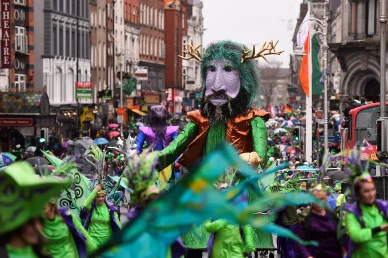
A parade float is pictured during the St. Patrick’s Day celebrations in Dublin.
Despite the fact that St Patrick’s Day parades and celebrations originated in the US, there are still plenty of parties taking place in Ireland. In fact, the Dublin parade is one of the world’s most famous, and it acts as the centrepiece of the city’s iconic week-long festival, which has been growing year on year since the late 90s.
These days, the city welcomes thousands of performers and tens of thousands of visitors from all over the world. These revellers enjoy everything from local parades in small towns and villages to huge parties and traditional céilithe music sessions. These are traditional social gatherings that mix music, dancing, eating, drinking and storytelling in a uniquely Celtic celebration.

St. Patrick’s Day Celebration in Dublin, Ireland
The Irish take their culture seriously, and so many of these sessions are rooted in cultural authenticity and a desire to preserve the nation’s history. At the same time, there’s a real desire throughout the country to balance authenticity with commercialism. It’s all about opening Ireland up to the rest of the world.
Ireland’s Expats Around the World
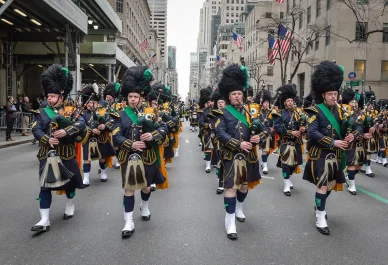
Bagpipers in traditional kilts marching in the St. Patrick's Day parade in New York City playing their instruments.
Of course, it’s not just Ireland that’s known for St Patrick’s Day. There are celebrations all over the world, with one of the most notable of all being the New York parade, which takes place every year on Manhattan’s Fifth Avenue. That was first held in 1772 and draws in 150,000 participants and 2,000,000 spectators every year.
You might also have heard of the Chicago green river, in which the city dumps 40 pounds of vegetable dye into the Chicago River to dye it green for the festivities. Then there’s Boston, which is known for being home to a large Irish diaspora and which also has a huge celebration.

Popular St. Patrick's Day traditions in America
Meanwhile, Tourism Ireland has launched its Global Greening initiative, which involves using green lighting to illuminate over 300 major landmarks around the world. It’s a great way for Irish expats to maintain their connection to their homeland, whatever their feelings are towards St Patrick.
Celebrating St Patrick’s Day in the 21st Century
By now, you know everything you need to know to have a happy St Patrick’s Day. Let’s finish things off with a short but sweet celebration guide to recap how you can make it a day to remember.
One easy way to celebrate is to tuck into some traditional foods, such as Irish stew or soda bread. Feel free to wear green to avoid the leprechauns, and if you’re a drinker then enjoy a pint of Guinness.
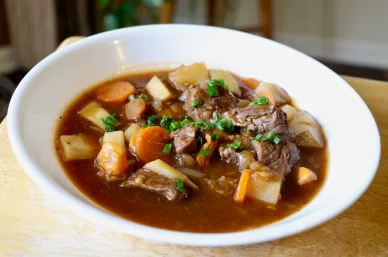
Traditional Irish stew in a bowl featuring tender lamb or beef chunks with potatoes, carrots, and onions in rich gravy.
Of course, you’ll also want to think about cultural sensitivity. Avoid talking about Ireland’s historic conflict with the English or putting on an accent, and try to enjoy authentic experiences over all of the commercial stuff.
Remember that the whole celebration is rooted in religion. As such, you should always be respectful, especially if you’re celebrating someone else’s culture and not your own. Have a fantastic St Patrick’s Day!