Esports
If you’ve been hearing the term more frequently lately and asking yourself, “What is esports?”, you’re not alone. You’ve also come to the right place.
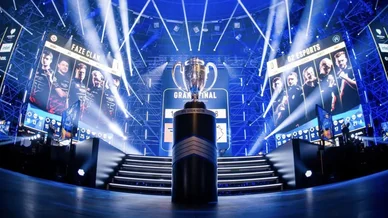
Esports is short for “electronic sports”, and the idea is to provide a platform for professional players to take each other on in a competitive environment in the same way that sports teams do. This differs from casual gaming, which is the kind of gaming that we might do ourselves with our friends and family, in the same way that the FIFA World Cup is different to a Sunday league game or a kickabout with your friends in the park. It also differs from other online entertainment people search for—like “casino online ireland”—which is gaming in a completely different sense, not a structured competitive sport.
Esports organizations host huge in-person events and even bigger online tournaments, offering prize money to the best teams and the best players. They also provide everything from sponsorship opportunities to player management, maintaining a professional infrastructure as part of the wider global games industry, which is predicted to be worth $320 billion in 2026.
In this piece, we’ll be taking a closer look at the super competitive world of esports, including some of the most iconic competitions out there. Let’s get started.
Understanding Esports as a Sport
So why does esports qualify as a sport? There are high-level competitions, rules and officials, and the need for a huge amount of physical and mental preparation, along with ongoing training and coaching.
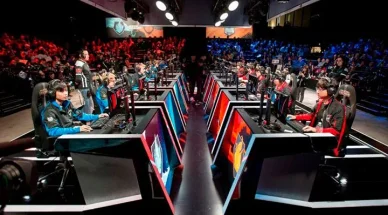
Esports is a form of competition using video games.
Esports athletes are also measured on many of the same criteria as other athletes. For example, top-tier competitors need:
- Discipline: Like any other professional athlete, they need to have the discipline to put in a huge amount of hard work to get to and remain at the top of their field.
- Reaction Time: Most gaming types are all about reaction time, and even slower-paced real-time strategy games still require the ability to think quickly and on your feet.
- Teamwork: Many esports competitions require people to play in teams, just like a professional footballer or basketball player.
- Tactics: Tactics are often the key factor which determine whether an esports player or team is successful.
- More: From a keen understanding of the rules to the ability to work with brands and network with other players, there’s a whole heap of additional skills that come into play.
Get to Know the Most Popular Esports Genres
Just like how regular sports come in all shapes and sizes (e.g. athletics, water sports, ball sports), so too do competitive esports. We’ll be taking a look at just a few of the most popular genres that you’re likely to see in the professional leagues, including first-person shooters, battle royales, multiplayer online battle arenas (MOBAs), combat games and real-time strategy games and team-based tactical titles like World of Tanks, which bring a very different kind of strategy-heavy competition into the mix.
And there’s a reason why these formats are most commonly seen in the major competitions. They offer the perfect competitive balance, allowing the gameplay to be fair and for players with a range of different specialisms to play in everything from 1v1 duels to team matches.
On top of that, the most popular esports are those which are a lot of fun for people to watch. You might think that something’s the best game in the world, but if it’s only fun to play and it is boring to watch, nobody’s going to tune in and the sponsors will soon drop out. Then there are the games that aren’t naturally competitive. It would be hard to host a Sims 3 tournament, for example, and you could argue that it doesn’t require a huge amount of skill to be good at it.
FPS/First-Person Shooters
First-person shooters are games like Counter-Strike, Valorant and Call of Duty—those in which players view the game through the eyes of their character and are tasked with shooting enemies, typically in teams.
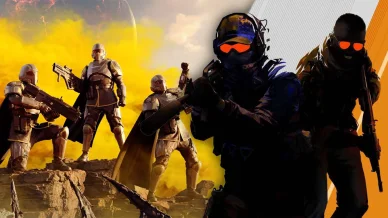
First-person shooters are games like Counter-Strike, Valorant and Call of Duty
In fact, the ability to work as part of a team, with clearly defined player roles and a team captain who calls the shots, is vital for players who want to come out on top. These games also require those rapid reaction times that we talked about, especially for certain player roles. If you’re a sniper, for example, then you need to know exactly when to pull the trigger. Teamwork is important too, because players need to support one another for the good of the team.
Many of the most popular games in the esports arena feature tactical maps and fast-paced action that lead to a lively atmosphere on match day, with emotions running high and team chemistry being put to the test.
Battle Royales like PUBG and Fortnite
Battle royale games are characterised by the fact that they have a large number of players who have to eliminate one another until the last player standing is crowned the winner. If you’ve ever seen The Hunger Games, you’ve seen a battle royale in action. The most popular battle royales you’ll see in esports include Fortnite, PUBG: Battlegrounds, Apex Legends and Call of Duty: Warzone.
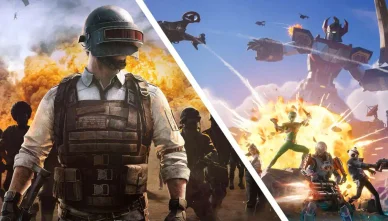
Battle royale games are characterised by the fact that they have a large number of players who have to eliminate one another until the last player standing is crowned the winner
Battle royale games often feature mechanics like a plane drop at the beginning in which the players are distributed randomly throughout the map, as well as zone shrinking, in which the playable area on the map becomes smaller over time. This works particularly well in tournament formats, because it forces players to confront one another instead of hiding out. Players can also generally loot their opponents, which is good news if they have a better weapon.
Even though the traditional battle royale was all about having a single winner who survived longer than anyone else, there are competitions where people play in duos or larger teams as well. When that’s the case, performance is based upon consistency across a series of games, rather than any individual victory.
Multiplayer Online Battle Arenas (MOBAs)
MOBAs can be thought of as 5v5 battles in which teams are pitted against each other and tasked with destroying their opponent’s base. Two of the most iconic MOBAs in e sports are League of Legends and Dota 2, but there are plenty of others to choose from, too.
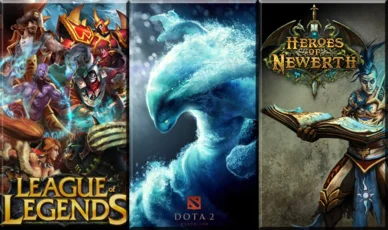
Multiplayer Online Battle Arenas (MOBAs) are a highly competitive subgenre of strategy games, typically featuring two teams of five players, where each player controls a single hero to destroy the enemy bas
Different MOBAs have different rules and setups and can thus require a different team composition from one game to another. With that said, maps typically have multiple lanes that are connected by a jungle area with jungle objectives (typically involving farming gold or harvesting other resources).
In MOBAs, every member of the team typically has a different role, whether the player in question deals damage or plays a support role. Across the board, though, MOBAs are known for team fights for map control and the need for players to think fast and adapt strategies during ever-changing conditions.
Fighting Games (Mortal Kombat, Street Fighter, etc.)
They’re known for requiring the ability to go toe-to-toe with the competition, just like you’d expect from a combat sport like boxing. As well as the two we mentioned in the title, popular games include Tekken and Super Smash Bros, and you’ll often find players taking part in arcade tournaments.
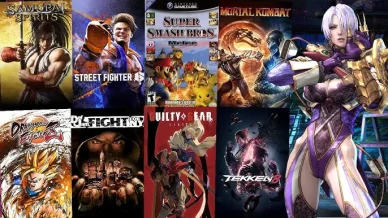
Fighting games area cornerstone video game genre characterized by 1v1 combat
The best combat esports players are known for their ability to master their controllers and their characters’ move lists, because success often comes down to the ability to read opponents and to react in real time, executing combos and demonstrating technical complexity and mastery over their characters.
Tournaments take place with a variety of different formats, with one of the most common being the double-elimination setup in which players are eliminated after two losses. Best-of-five sets are also pretty popular, which essentially give people another chance to stick around in the competition.
RTS Games
Real-time strategy games are an interesting addition to the list of genres because they tend to focus more on decision-making and tactical maneuvers than they do on the ability to hammer out the right buttons at the right time.
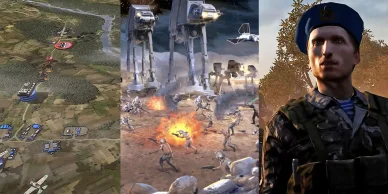
Real-time strategy (RTS) games are a subgenre where players control units and resources in real-time without taking turns, focusing on base-building, resource management, and tactical combat
Some of the most iconic RTS games on the scene include StarCraft II, Warcraft III and Age of Empires, three titles which do a great job of characterising what the RTS genre is all about. Expect to see players pitted against each other in competitive leagues, clashing one-on-one on different maps to determine an overall victor. Knockout tournaments often feature a best-of-three or a best-of-five, so that lucky players don’t get through by accident.
As for the mechanics, most RTS games revolve around gathering resources for base construction, with players trying to balance building an army with developing an economy. At the highest level, players are often measured on their actions per minute (APM), which shows how quickly they’re able to issue commands.
Most Popular Tournaments in Esports
Different tournaments are structured in different ways, with international championships often beginning with either open or closed qualifiers in which players and teams are able to try to earn their place in the world finals. From there, they’ll typically progress to group stages or leagues, where competitors continue trying to progress to the later stages.
The final stages of competitions are often played in offline LAN finals in huge arenas with live audiences, with online viewers tuning in live via broadcast studios. The winning team will win a cash prize, but there are also often multi-million-dollar prize pools for runners-up.
Dota 2: The International
The International is currently the longest-standing tournament on the competitive Dota 2 calendar.
The International is one of the most famous tournaments in all of esports, with many other tournaments looking to follow in its footsteps. The TI prize pool has broken records multiple times, with the money coming partly from player purchases including the coveted battle pass, which grants access to digital rewards and in-game cosmetics. It’s a great example of a game that reinvests its profits into the community that has spawned around it.
To take part in the tournament, players need to earn their way in through regional leagues, closed qualifiers and direct invitations, after which qualified teams are pitted against each other in a group stage. From there, it moves on to double-elimination playoffs, before the grand finals are staged in huge arenas, which The International never struggles to fill.
Winners are awarded the Aegis of Champions, a physical trophy forged from bronze and silver. It’s arguably the most famous prize in esports history.
League of Legends: World Championship
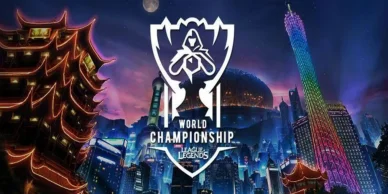
The League of Legends World Championship (commonly abbreviated as Worlds) is the annual professional League of Legends world championship tournament hosted by Riot Games and is the culmination of each season
The League of Legends World Championship is the highlight of the year for Riot Games’ huge fanbase and global ecosystem, bringing people together from the LCS, LEC, LCK, LPL and various other leagues to fight it out for the title of the best in the world.
These leagues are generally regional, with different leagues covering different countries and regions like Korea, China, Europe and North America. The best teams from those leagues then go on to battle it out at the Worlds Finals for the Summoner’s Cup, a trophy that was first introduced back in 2012 and which already has a huge amount of history behind it.
The LoL World Championship is known for taking place over multiple weeks and featuring play-in stages for lower-seeded teams, as well as a group stage and then a knockout stage, providing a range of entertainment that goes way beyond the elaborate opening ceremony. It’s so much more than an esports competition; it’s almost a mini festival.
Counter-Strike Majors (CS2 / CS:GO)
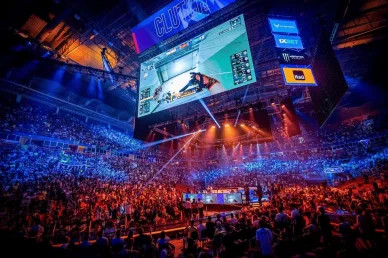
Valve-sponsoredCounter-Strike Majors(CS:GO and CS2) arethe most prestigious $1.25M+ tournaments in the scene, held since 2013
The Counter-Strike Major series is the biggest event series for the game. Acknowledged as the most prestigious trophy in the huge ecosystem that’s spawned around the franchise, these events are organised and backed by the developers and aim to bring together the world’s best teams to compete for legend status.
Competitors start out by facing a rigorous qualification process through regional events and invitationals before moving on to the final LAN stage. This draws in huge prize pools and massive crowds, both in-person and online.
The majors include PGL, IEM and ESL events, which are created by three major e-sports organisations. It’s hard to overstate the prestige that comes from winning one of these tournaments, and reaching any of the structured stages (Challengers, Legends and Champions) is considered to be a huge honour. In fact, for many people, it’s the defining moment of their career, which is why so many people work so hard to try to get there.
Global Championship/Global Series (PUBG)
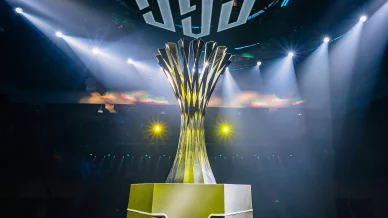
The PUBG Global Championship is the final event and the World Championship of the 2025 Competitive Season organized by PUBG Corporation
The PUBG Global Championship and PUBG Global Series are notorious for the high quality of players they bring to the fray, with incredible teams built from an alliance of mega-stars at the game. The PGC finals can’t be won by any individual player, though. They require teamwork and coordination, which is why only the best teams in the world make it through to the stage.
In fact, for them to play in the finals in the first place, they need to prove their mettle through a rigorous series of regional qualifiers and tournaments, consistently performing in match after match to even stand a chance of taking home the overall chicken dinner.
With a vibe that’s more like a festival than a sporting event, the finals take place over multiple days, with teams competing across a bunch of LAN matches to climb up the rankings via a point system, where they’re rewarded for both surviving and eliminating others. That provides a healthy balance between attack and defence, ensuring that only the best of the best have a chance of taking home the prize money.
EVO and Other Fighting Game Tournaments
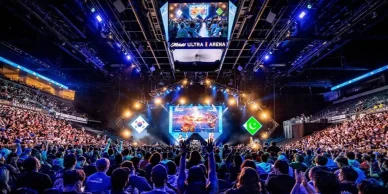
The Evolution Championship Series (Evo)is the world’s largest, oldest, and most prestigious open-bracket fighting game tournament, held annually in Las Vegas
EVO is the Evolution Championship Series, which is the world’s leading event in the fighting esports category. To date, no single fighting game has been able to dominate to the same scale that Dota 2, LoL, Counter-Strike and PUBG have been able to, and so tournaments like EVO exist to bring multiple games under a single roof.
EVO is built around an open bracket, which allows anyone to enter and to compete with the best players in the world. That leads to huge numbers of people taking part, often numbering thousands of players across scores of countries, allowing for incredible, FGC community-driven championships that reward the fans and the talented amateurs just as much as the pros.
As that huge number of entrants starts to dwindle, the competition leads to Grand Finals Sunday, where the most popular games move on to a main stage and are played on huge screens in front of thousands of fans. The prize money is pretty good, but most players are in it for the glory.
Famous Teams and Players
Just like sports in general, the proliferation of esports organizations and high-profile competitions has led to a generation of esports stars, and they act and are treated just like Kobe Bryant or Travis Kelce, but without Taylor Swift. There are even organisations that function like professional sports clubs, managing multiple teams and employing coaches, sports psychologists and managers for individual players.

Greatest Esport Rosters Explained in 18 Minutes
If they’re managed well and they put in the work, a player can expect to build a global fanbase and earn a small fortune through player salaries and sponsorship deals. They’ll typically sign professional contracts with both teams and managers and even transfer from one team to another. They can also earn a decent chunk of change through streaming on social media and selling merchandise to fans.
Well-known individual players include LoL’s Faker, Counter-Strike’s s1mple and Dota 2’s N0tail. Some of the biggest teams are T1, Team Liquid and G2 Esports. And don’t forget that for every famous player, there are a thousand unknowns who are just as entertaining to watch.
The Future of Esports
Esports is undeniably here to stay, with the industry continuing to grow and experiencing increasing mainstream acceptance day after day. There are now school and university leagues at campuses throughout the world, and these are often coupled with fields of study or given equal status to traditional sports. Some facilities are investing huge amounts of money into infrastructure development and educational programs, picking up VR and AR devices or splashing out on powerful analytical suites.
Esports has even been touted as having potential Olympic status. The International Olympic Committee (IOC) actually created the Olympic Esports Series, which took place online in 2021 and in-person in 2023.
The combination of this continuing growth and the demand for media rights and sponsorship has also ensured that there’s a pipeline of emerging talent, with young players specialising in new disciplines and eying up esports careers in much the same way that kids used to want to grow up to become traditional sports stars. For gamers and gaming fans, there’s never been a more exciting time to be alive.