Bronson
Meet Charles Bronson prisoner extraordinaire. He’s one of the most famous inmates in the entirety of the UK prison system, but what did Charles Bronson do, and how did the young Michael Peterson turn into a man who’d menace society?
Spoiler alert: he committed an armed robbery and then continued to build his reputation for extreme violence through his actions in prison, including taking hostages while behind bars.
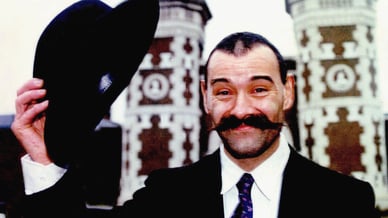
In today’s article, we’re going to dig deeper into Bronson’s history, providing an overview of his crimes along with some context for why he received such a long sentence. You’ll learn why he’s considered the most violent and the most dangerous prisoner in Britain, as well as why there’s so much debate about whether he’ll ever be safe enough to be granted parole.
Along the way, we’ll also look into the famous prisoner’s early life and uncover the man behind the media myth. Is he truly a monster, a man who thrives on violence and who’s unfit to ever re-enter society? Or is he a misunderstood man that’s become a scapegoat for the inherent violence inside us all? By the end of this article, you’ll be ready to decide for yourself.
Bronson’s Early Life and First Criminal Conviction
Michael Peterson’s Childhood and Youth
The boy who’d later go on to become the famous Charles Bronson prisoner that we see in the newspapers was born as Michael Peterson in 1952 in Aberystwyth, Wales. He didn’t stay there for long, though, spending most of his childhood in Luton, Bedfordshire.

Bronson had a relatively normal childhood, with a family background that was rooted in the working class and characterised by stability. This isn’t a case of someone who was exposed to violence as a kid and who subsequently took it out on others. In fact, multiple people who were around at the time have said that there were no signs of deprivation or abuse.
Unfortunately, he struggled with discipline at school and soon started getting into fights, developing a reputation for aggression and getting charged with petty crime and disorderly behaviour. That didn’t stop him from trying to go legit, including by pursuing a career as an amateur boxer, but nothing stuck. He just didn’t seem interested in working.
He only seemed interested in violence.
Bronson’s Early Crimes
So what did Charles Bronson do to go from minor criminal to convicted felon? Well, that’s a good question.
Throughout the seventies, Bronson’s crimes continued to escalate, as did the violence with which he carried them out. This culminated in the armed robbery in 1974 that would eventually lead to his sentencing and conviction. The young Bronson, still going under the name of Michael Peterson, used a sawn-off shotgun to steal some money from a post office. It was a relatively small amount of money, but it was enough to land him seven years in jail.

Charles Bronson: Britain's Most Notorious Prisoner
It was a stupid, impulsive crime. Poorly conceived and badly carried out, it was hardly the hallmark of a major gangster. The authorities agreed, which is why he was only given seven years. The idea was that Bronson would learn his lesson, be rehabilitated and go on to be released. But the authorities didn’t know that Bronson’s real story would take place after he entered the prison system. It was only just beginning.
Becoming the “Most Dangerous Prisoner”
The Violence Grows Behind Bars
It was while in jail that Michael Peterson (criminal) became Charles Bronson (prisoner), building his reputation for extreme violence and unpredictability through a series of assaults on everyone he could get his hands on. It wasn’t just his fellow inmates on the receiving end of his attacks; he also targeted the prison officers.
Before long, he was known for the length of his disciplinary records thanks to how quickly he could fly off the handle. That led to him being transferred from one high-security prison to another, as well as spending increasing amounts of time in isolation in segregation units. Many of these incidents also led to extra time being added to his sentences.
Bronson’s most violent incidents included taking prison staff, teachers and fellow inmates hostage, stunts that made him notorious and led to his face being splashed across the newspapers. Before long, that seven-year prison sentence had turned into decades behind bars, becoming a self-perpetuating prison sentence that seemed like it would never end. Perhaps he’d never be safe enough to be released.
Bronson Takes Some Hostages
Bronson is famous (or infamous) for a lot of things, but perhaps the most famous of all were the hostage incidents that took place throughout the 1980s and 1990s. Even one such incident would have been bad enough, but Bronson took hostages again and again, showing that he couldn’t be trusted in any environment.
One of the most well-known of these cases was when he held an art teacher hostage for two days, drawing the attention of the media while making strange demands. On other occasions, he barricaded himself inside his cell with prison officers or inmates, typically because of some grievance or other about the way he was being treated.
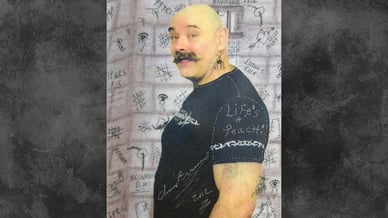
Bronson knew exactly what he was doing. Despite stripping naked or destroying fixtures and fittings, he wasn’t crazy; he just wanted attention, because he knew he could use that attention for his own gain.
He paid the price for his behaviour, though. He spent years in solitary confinement and ensured that no matter which facility he went to, he’d be treated as a volatile high-security prisoner who couldn’t be exposed to the general population. He’d also made sure that his sentence would continue to grow longer and longer over time.
The Bronson Mythology and His Reputation in Pop Culture
How the Name Change Built His Persona
Michael Peterson didn’t become Charles Bronson by accident. In fact, it was a clear and conscious decision, a calculated move that was all about reinventing his media image and boosting his notoriety.
Taking place during the 1980s, when Bronson was already a hardened criminal who was deep in the cycle of violence, Peterson’s new name came from the Hollywood actor Charles Bronson, a movie star who was known for playing tough guys and hard men. For Peterson, it was the perfect choice of name, because he saw himself as a similar kind of character, failing to note that for the man whose name he’d taken, it was just an act.
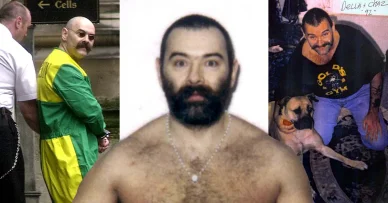
Still, the media loved it, and the new name fed into their preconceived ideas of Bronson as a larger-than-life criminal who was more like an unstoppable force of nature than a regular person. Years later, Bronson would legally change his name once more, this time calling himself Charles Salvador in a nod to Salvador Dali. But for everyone else, he’ll always be remembered as Bronson.
“Fans” and His Creative Side
It’s not unusual for criminals to have a cult following, and that’s certainly true here. In fact, Charles Bronson prisoner probably has more fans than his Hollywood namesake these days.
Part of the reason for that in Bronson’s case is that his fans say his creative works show a more sensitive side of the violent criminal. He spent much of his time in isolation working on prison art, often creating caricatures and self-portraits, and many of those works have since been sold outside the prison.
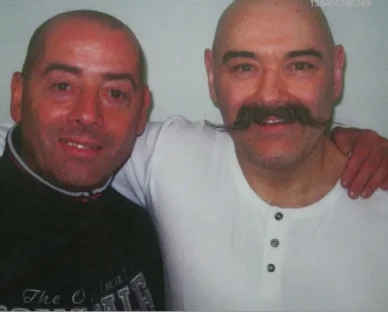
He’s also penned a number of autobiographies that detail his life behind bars, and he’s a keen letter writer who’s maintained correspondence with many of his most ardent fans. This has done a lot to soften his public image, with some people hailing him as a rebel artist, but we need to be mindful that he’s only famous in the first place because of his violent crimes.
After all, while Charles Bronson might be a painter who’s also written a book, the exact same thing could be said of Adolf Hitler.
Tom Hardy and the Bronson Movie
In 2008, director Nicolas Refn released the Bronson movie, which starred Tom Hardy as the titular character. For that performance, he won the British Independent Film Award for Best Actor. This Charles Bronson Tom Hardy combination did a lot to shape the criminal’s pop-culture image and to determine the way that he’s seen by both the British public and the wider world.
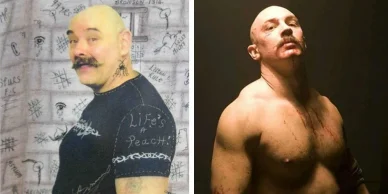
While it’s true that the movie is based on reality, it relied heavily on stylised violence, dark humour and unreliable narration, which makes it difficult to know how much of it can be trusted. There are even points at which Bronson speaks directly to the audience, breaking the fourth wall and further blurring the lines between what’s real and what isn’t.
The release of the film helped to further reinforce the myth of Bronson being some sort of antihero who’s singlehandedly taking on authority, but it’s important to remember that the movie is designed for entertainment and isn’t a documentary. It’s inspired by real events and by Bronson as a person, but it’s all about entertaining people rather than reflecting reality. In other words, you shouldn’t let it shape your perception.

Psychiatric Evaluations and Diagnoses
Throughout the years, a number of professional psychologists have carried out evaluations of Charles Bronson, and their analysis makes for fascinating reading. Some of the experts disagree on which specific personality disorder the man has, but the general consensus is that he shows signs of extreme impulsivity, chronic aggression, problems with anger regulation, confrontational habits and a need for stimulation that caused him to be violent in prison as a way of breaking the monotony.
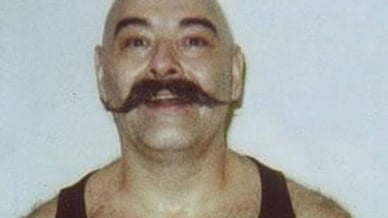
These evaluations have helped to paint a picture of who Bronson really is beneath the mask, and they’ve played important roles in the various court hearings and parole reviews that have taken place throughout his life. The bottom line is that he has some serious mental and behavioural problems at the heart of his personality, which is one of the reasons why he keeps on being moved between psychiatric treatment units and regular prison cells.
This is one of the many reasons why there’s been so much debate around where treatment ends and where personal responsibility begins, especially for extreme cases like that of Bronson. Prisons are designed for rehabilitation, but what if rehabilitation just isn’t possible?
Is Bronson Truly “the Most Dangerous” Prisoner?
The answer to the question of whether Charles Bronson is the most dangerous prisoner of all depends upon the criteria you’re using to make that judgement. Still, it’s safe to say that he probably isn’t, and for several reasons.
Bronson’s official prison record contains no confirmed murders, and while there have been multiple assaults and hostage situations and a huge amount of damage to prison property, with nobody dead, to call him the most dangerous man in the prison system can only be a media exaggeration.
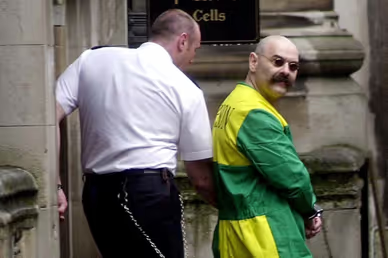
With that said, even though much of Bronson’s legend is as a result of media hype, it’s still clear that he’s a dangerous man, and there are few people who’d want to be locked up in a room with him. Interestingly, Bronson and the tabloid press almost worked together to create his public image, because Bronson loves to be demonised and the press love to sell papers.
But the bottom line is that this isn’t really the story of a single man. Bronson’s story is a story about the prison system and how it handles (or fails to handle) those who don’t fit the mould. Like schools, prisons aren’t designed with personalisation in mind.
Where Bronson Stands Today: Appeals and Paroleа поче
Charles Bronson’s Current Status
So where is Bronson today? Well, there’s a decent amount of information out there, but we don’t want to give away too much information because there’s always a risk that if people know his current prison, they’ll start writing to him. That’s never a good idea.
Still, we can safely say that Bronson is currently in a high-security prison in England and being held as a Category A inmate, meaning that a risk assessment has found that he’s still a high risk to the public and national security.

Is it safe to let out Britain’s most notorious prisoner?
Michael Peterson now is in his seventies, and so it says a lot that he’s still deemed to be a threat despite his advancing age. While people point to his art and his writing as evidence that he’s a reformed character, parole boards don’t agree.
As for his name, he’s still legally Charles Bronson (prisoner), despite the name changes. And without meaning to denigrate the legacy of the great actor whose name he stole, when you say “Charles Bronson” to most people, it’s the prisoner that they think of.
Parole Hearings and Public Opinion
In recent years, Bronson has gone up before the parole board on multiple separate occasions, with him and his legal team arguing that Charles Bronson prisoner is now Charles Bronson artist, a reformed man. This public debate has been going on for years, and it seems likely that it will continue for many years to come.
Meanwhile, Bronson has developed a number of relationships in prison, another factor that supporters point to when arguing for his release. That includes the Charles Bronson prisoner spouse series of pen-pals, women who’ve become engaged to the prisoner despite the fact that he’s still behind bars. Each of these relationships, conducted through letters and visits, has collapsed over time, but they’ve also helped to keep him in the headlines.
However you feel about Bronson, it’s clear to see that there are two sides to the debate. Public opinion is split between those who think of Bronson as a changed man and a classic example of rehabilitation in action, and those who think he’s just too dangerous to ever walk the streets again.
The Life and Legacy of Charles Bronson
Ultimately, once you know the answer to the question of what did Charles Bronson do, it quickly becomes apparent why he’s such a controversial figure. The life of Charles Bronson says a huge amount about the British prison system, and his larger than life personality has ensured that the British public maintains an unhealthy fascination with the man.
There’s an argument to be made that Bronson’s case should make us call for prison reform, especially because of the numerous hostage-taking events and the way in which the prison system has struggled to deal with his violent behaviour and disruptive protests. At the same time, it also highlights questions about media responsibility, because he wouldn’t have carried out those actions in the first place if he hadn’t known that the press would write about him to sell more papers.
Ultimately, it all comes down to the case of a man who committed an armed robbery and then continued to carry out violent crimes behind bars. And while it’s easy to be fascinated by the Charles Bronson persona, we should instead focus on his victims and ensure the safety of the staff who are charged with keeping him in custody. We owe it to them, and not to him.